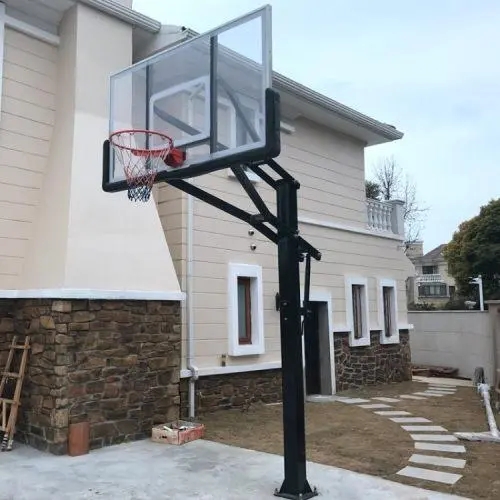
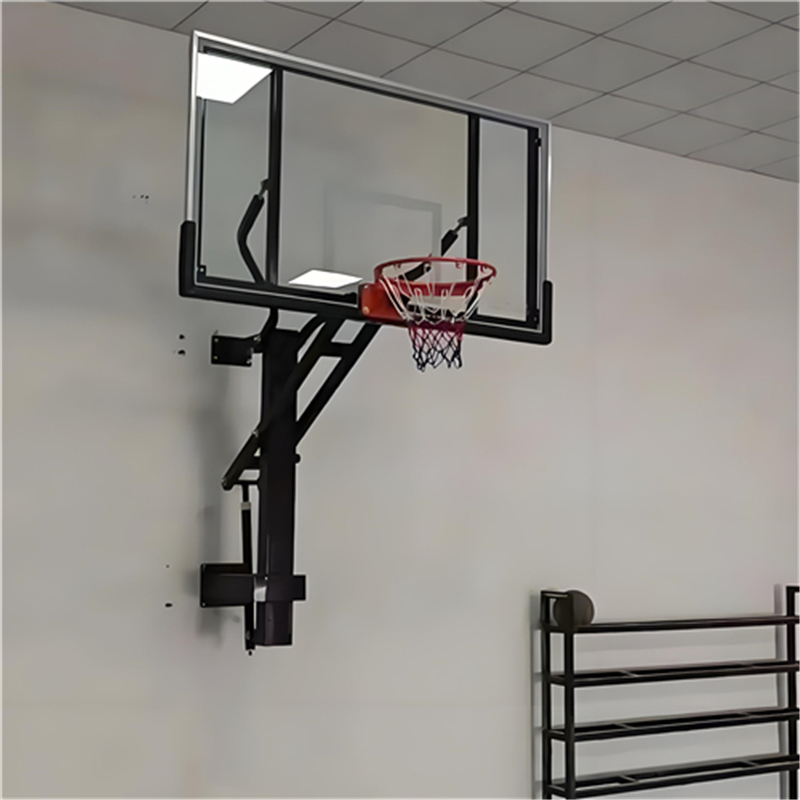
335 visitsIn‑ground adjustable basketball hoops combine the rock‑solid stability of concrete‑anchored fixed hoops with flexible height adjustment. You can lower the rim for kids and youth training, then raise it to official 10‑ft (3.05 m) regulation height for teen and adult games.

There is no single “one‑size‑fits‑all” best model. The right choice depends on your usage frequency, player age groups, budget, installation conditions and site requirements. Below we break down core evaluation criteria, typical application‑oriented recommendations and factory‑supplied adjustable‑in‑ground series.
Key Features of A High‑Quality In‑Ground Adjustable Basketball Hoop
1. Stable Height Adjustment Mechanism
Good‑grade systems adopt hand‑crank or actuator lifting structures. Usable height range normally covers 2.45 m‑3.05 m (8‑10 ft).
Reliable internal locking structure prevents slipping or dropping under impact.
Adjustment should be smooth, requiring no excessive brute force.
Avoid cheap telescoping‑pole designs that wobble heavily after long‑term outdoor use.
2. Heavy‑Duty Main Pole & Frame
Select thick Q235 square steel tube for the main upright pole. Thicker‑wall tubing minimizes shaking during rebounding and dunking.
Surface treatment must be shot‑blasting plus electrostatic powder coating for long‑term anti‑rust and anti‑UV performance for all‑weather outdoor exposure.
3. Backboard Options
Tempered glass: Premium commercial choice. Delivers authentic rebound performance, ideal for schools, training centers and serious‑player home courts. Available in 54‑inch or 60‑inch sizes.
Polycarbonate / PC: Cost‑effective shatter‑resistant alternative, good for family casual play, but rebound quality cannot match glass.
4. Breakaway Spring Rim
Standard Φ45 cm spring breakaway rim absorbs impact from dunking. It protects the whole hoop structure and reduces safety risks, highly recommended for high‑frequency use.
5. Concrete Anchor Foundation
The hoop must be fixed into a concrete‑buried anchor sleeve. The foundation hole size and depth should strictly follow official drawings; poor foundation will cause permanent shaking and tilting.