157 visitsMany homeowners want to install a wall-mounted basketball hoop directly onto their house exterior wall or garage wall. The simple answer: Yes, it is possible, but only if your wall meets strict structural requirements. Improper installation can cause serious wall damage and safety risks.
1. Check If Your Wall Is Suitable
✅ Acceptable wall types for full-size basketball hoops
Solid concrete wall
Solid brick wall
Engineered reinforced timber wall with thick load-bearing studs
❌ UNSAFE wall types (Do NOT mount standard basketball hoops here)
Hollow drywall alone (no heavy backing)
Thin vinyl siding, aluminum siding without solid substrate
Old crumbling brick, damaged block walls
Non-load-bearing partition walls
A full-size hoop creates strong vibration and pulling force during shooting and dunking. Siding material itself cannot support the weight and shock load. You must anchor brackets into the structural wall behind siding.
2. Critical Pre-Installation Factors
Wall Bracket Load Capacity
Choose heavy-duty galvanized or powder-coated steel mounting brackets designed for outdoor use. Lightweight brackets will bend and loosen over time. Always use stainless steel anchor bolts to avoid rust outdoors.
Required Clearance
Leave at least 10–15 feet of open space in front of the rim for safe shooting
Keep the hoop away from windows, gutters, roof eaves, outdoor lights
Prevent basketballs from striking house walls, doors or glass windows
Noise & Impact Considerations
Constant ball impact creates vibration and noise, which may transfer into the house and disturb family members. We recommend installing rubber shock pads between brackets and wall to reduce vibration. Avoid mounting near bedrooms.
3. Height Standard
Official rim height is 10 feet (3.05 m). If children will use the hoop, select an adjustable wall-mounted basketball hoop that allows lower height settings.
4. Key Installation Tips
Locate structural studs or solid concrete block positions before drilling. Never drill randomly into siding.
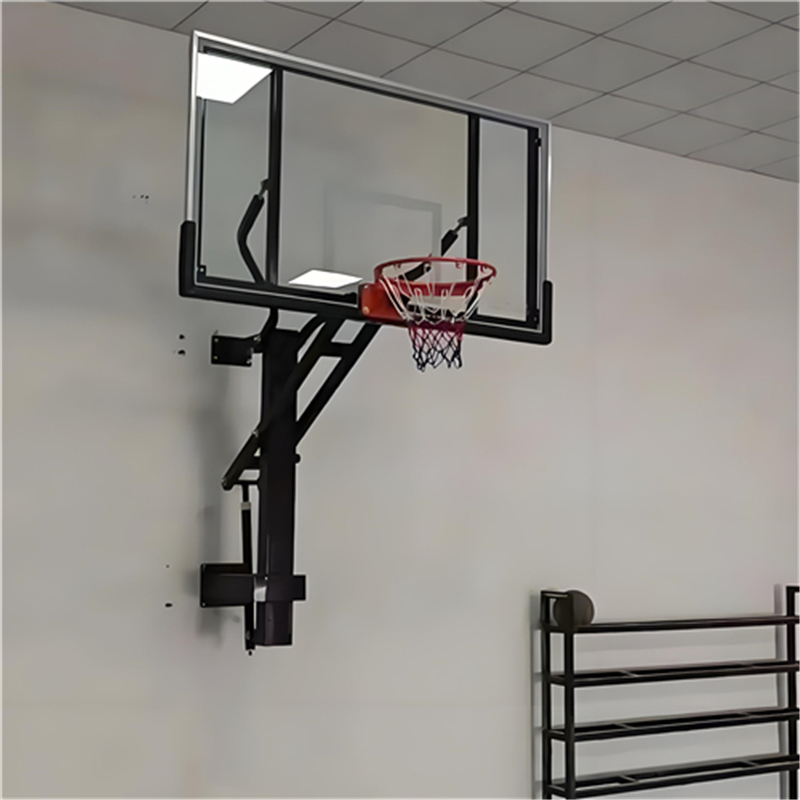
Remove partial siding if needed to ensure bolts connect firmly to the main wall structure; seal all drill holes properly with waterproof sealant to prevent water intrusion and wall rot.
Keep brackets level during installation; uneven mounting leads to extra stress and loosened bolts.
Inspect all bolts every 3–6 months. Retighten any loose fasteners after storms or frequent play.
5. Should You Avoid Mounting Hoops on the House?
If any of the following apply, an in-ground basketball hoop is a safer alternative:
Your wall is thin, old, or has visible cracks
You plan frequent dunking
Windows are close to the hoop
Local HOA, neighborhood rules or municipal codes ban exterior wall-mounted sports equipment
Final Buying Advice
If your structure qualifies, select outdoor-rated wall-mounted basketball hoops with anti-rust brackets, breakaway rim and vibration dampeners. Cangzhou Haoran Sports Equipment Co., Ltd. supplies outdoor wall-mounted basketball systems with heavy-duty mounting hardware and complete installation guides. Contact our team for technical support and factory quotations.