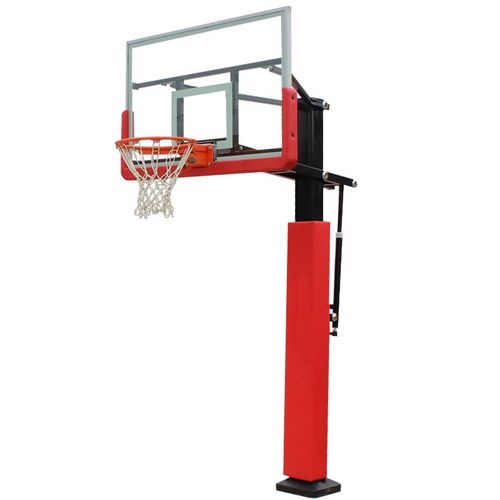
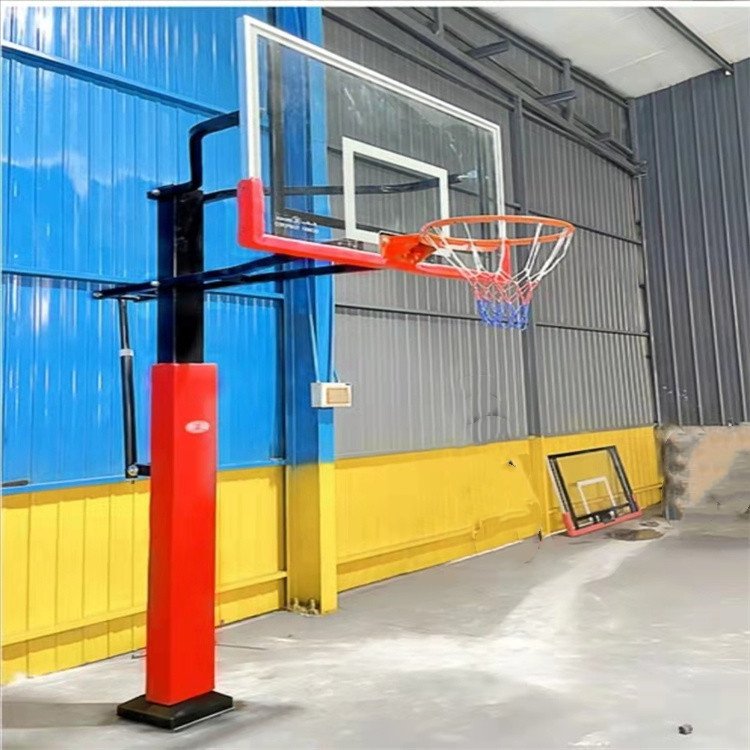
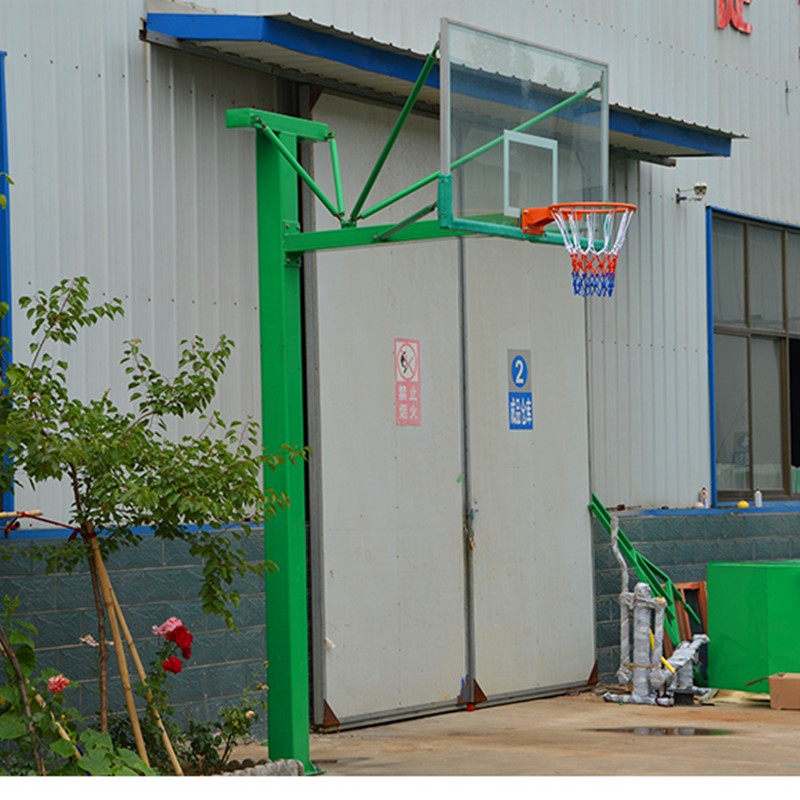
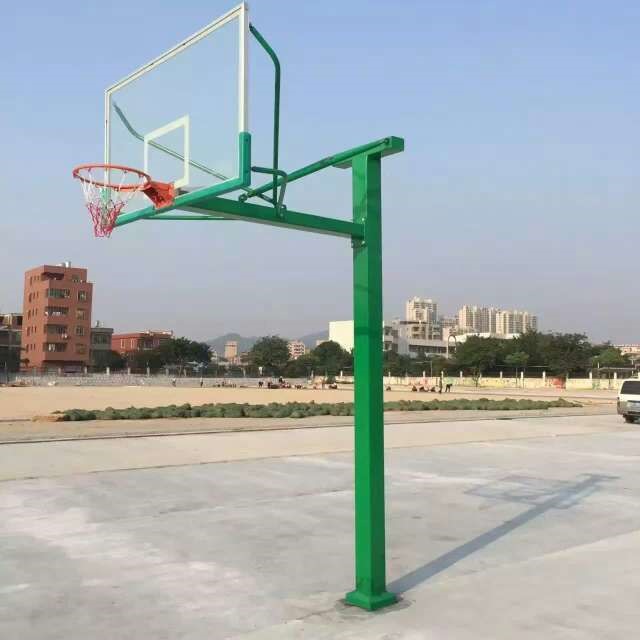
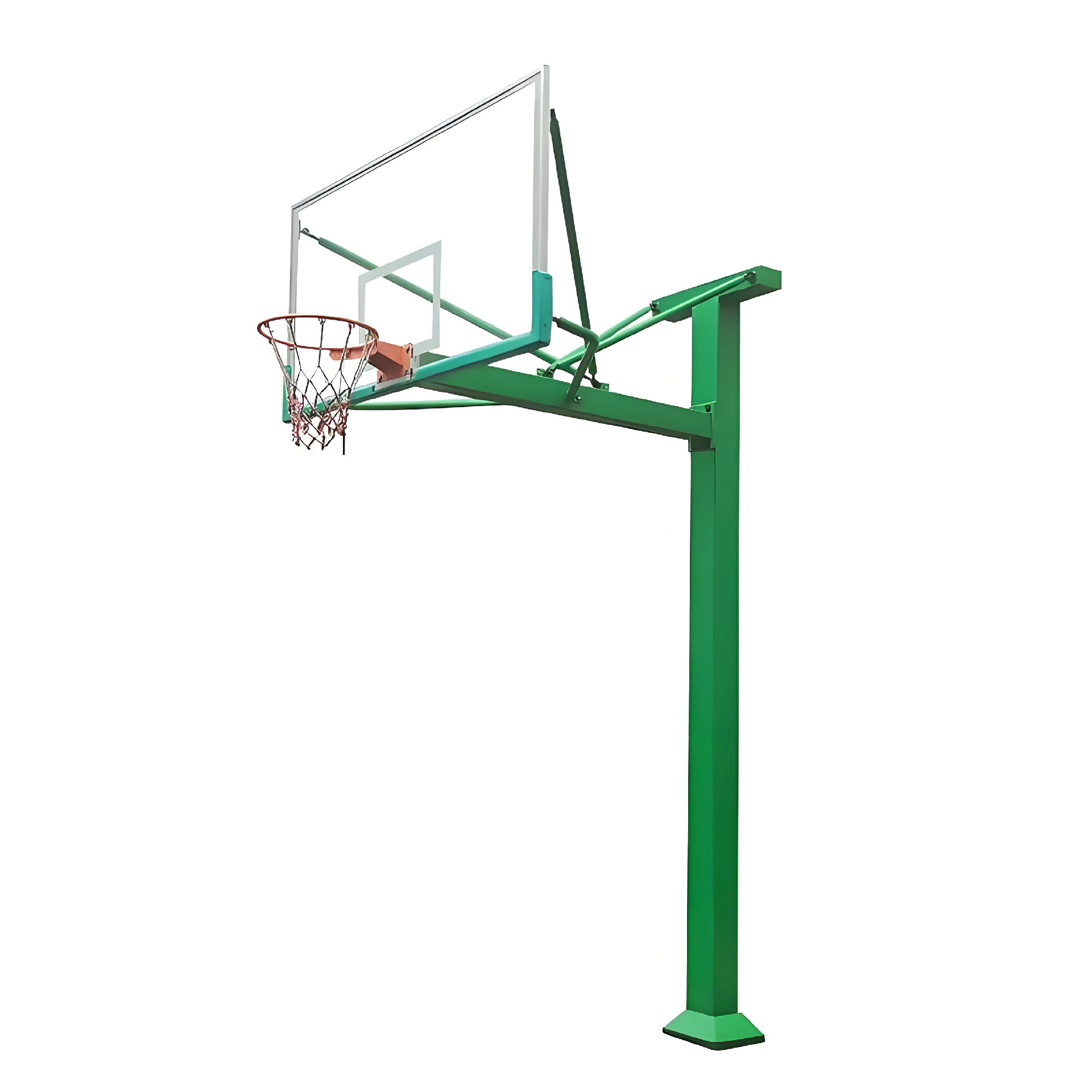
207 visitsThe recommended embedment depth for safe in-ground basketball hoops is generally no less than 800 mm. In some high-standard scenarios, 900 mm or deeper may be required. The specific depth must be determined based on the basketball hoop specifications, soil conditions, and international/domestic standards. The following is a detailed explanation:
I. Core Basis: International and Domestic Standards
FIBA Standards: While not directly specifying the embedment depth, FIBA requires that the bottom of the basketball hoop column in contact with the ground possess sufficient stability to withstand the impact of shooting. The embedment depth of in-ground basketball hoops must ensure that the verticality tolerance between the column and the ground is ≤1/100 to avoid tilting and subsequent shifting of the center of gravity.
Chinese National Standard (GB 23176-2008): General requirements: The embedment depth of the equipment column should be no less than 600 mm when the equipment height above ground is >2000 mm; and no less than 400 mm when the equipment height is <1000 mm.
Specific requirements for in-ground basketball hoops: Burial depth ≥ 900mm, horizontal dimensions of the concrete foundation pit ≥ 800mm × 800mm, concrete strength ≥ C20.
Soil conditions: Soil dry strength within 800mm of the surface must be medium or higher. If the soil is soft, the burial depth or foundation pit size needs to be increased.
II. Depth Selection in Practical Applications
**Common Scenarios (e.g., schools, communities)** Burial depth: 800mm (meets foundation stability requirements).
Foundation pit dimensions: Length × Width × Depth = 700mm × 700mm × 800mm. The concrete must be vibrated and compacted after filling to avoid voids.
Example: A school installed a circular tube basketball hoop with an arm length of 1800mm. The foundation pit depth was 800mm, and the concrete strength was C25. No shaking occurred after 3 years of use.
**High-Standard Scenarios (e.g., professional stadiums, seaside/high-wind areas)** Burial depth: 900mm-1000mm (enhances wind and impact resistance). Foundation Pit Dimensions: Length × Width × Depth = 800mm × 800mm × 900mm, concrete strength ≥ C30, reinforced with steel bars.
Example: A coastal stadium used basketball hoops buried 1000mm deep, which remained stable after a typhoon test.
III. Key Factors Affecting Burial Depth
Basketball Hoop Specifications
Arm Length: The longer the arm length (e.g., 2250mm), the longer the impact arm during shooting, requiring deeper burial to balance the torque.
Height: When the column height > 3000mm, the burial depth needs to be increased proportionally (e.g., for every 500mm increase in height, the burial depth increases by 100mm).
Soil Conditions
Soft Soil/Backfill: Excavation to a hard soil layer is required (e.g., below 1200mm from the surface), or reinforcement using methods such as enlarging the foundation pit or piling.
Rock Layer: If the bottom of the foundation pit is rock, blasting or drilling to the design depth is required, followed by filling with concrete.
Usage Scenarios
High-Frequency Use: If used for more than 5 hours daily, increase the embedment depth by 10%-20% to extend lifespan.
Children's/Youth Playgrounds: Due to the lower force of shooting, the embedment depth can be appropriately reduced (but must be ≥600mm).
IV. Installation Precautions
Verticality Calibration: After embedding, use a level to check the verticality of the column; deviation ≤1/100.
Concrete Curing: After pouring, cover with a moisturizing film for 7 days to prevent early cracking.
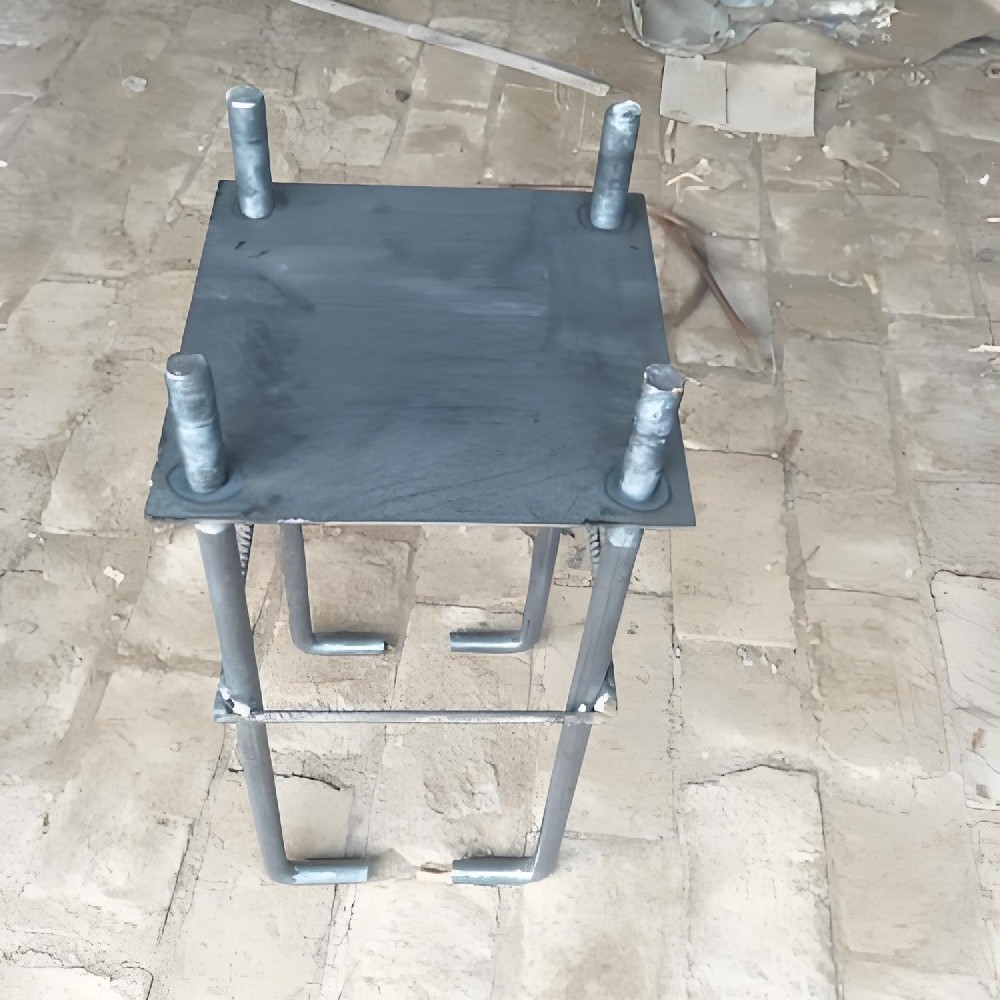
Embedded Part Corrosion Protection: Embedded parts must be hot-dip galvanized to prevent rust and loosening.
Regular Inspection: Inspect the embedded concrete for cracks and the embedded parts for rust annually, and repair promptly.